
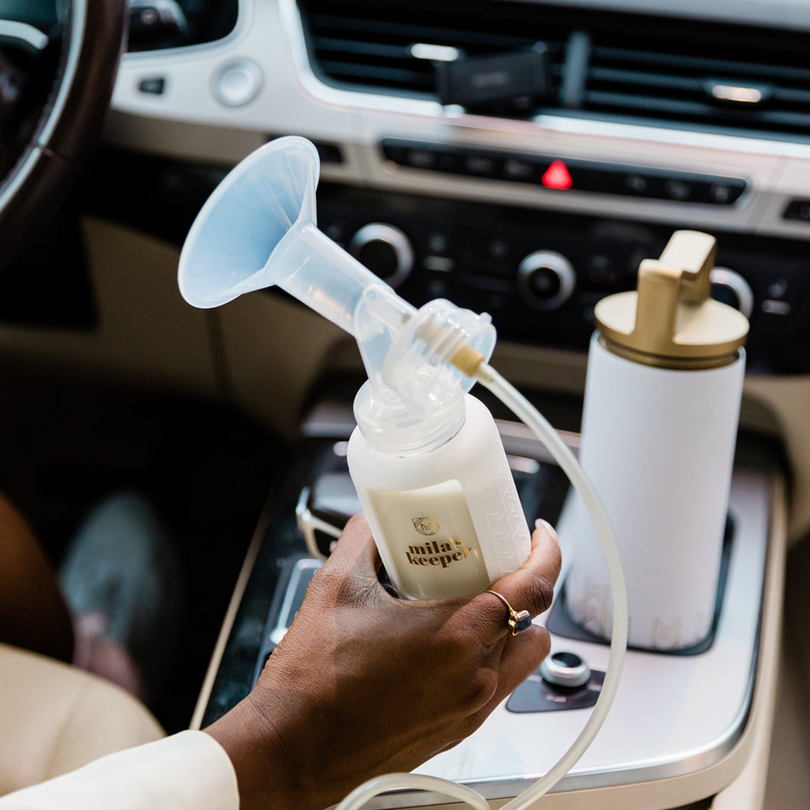





For many new parents, pumping breast milk is described as a “choice,” a “backup,” or a matter of convenience. In practice, pumping is often a necessary system, one that enables parents to return to work, share feeding responsibilities, or continue providing breast milk when direct nursing isn’t possible.
Yet when people talk about the cost of pumping, they usually focus on a single line item: the breast pump itself. That narrow framing misses the reality most pumping parents live with every day.
The true cost of pumping includes out-of-pocket expenses, unpaid time, emotional labor, and the degree (or absence) of employer support. Taken together, pumping is not a one-time purchase but an ongoing infrastructure, one that parents are largely expected to fund, manage, and maintain on their own.
This article breaks down the real economics of pumping, including the often-overlooked need for multiple pumps, how much time pumping actually takes, and what employers are required to provide.
Pumping Is Work (Even When It’s Unpaid)
Before looking at dollars and policies, it’s important to name a core truth: pumping is labor.
It requires:
-
Physical exertion
-
Scheduling and time management
-
Equipment setup and maintenance
-
Cleaning, storing, and transporting milk
-
Mental tracking of supply and timing
Unlike feeding directly at the breast, pumping introduces an additional layer of logistics. Milk must be expressed, handled, stored safely, and often prepared for someone else to feed later. None of this happens automatically, and none of it is passive.
When evaluating the cost of pumping, the real question is not “How much does a pump cost?” but rather:
What does it take, financially and structurally, for pumping to be sustainable over time?
The Direct Financial Costs of Pumping
Breast Pumps Are Not a One-and-Done Purchase
A common assumption is that pumping requires one breast pump. In reality, many pumping parents rely on two pumps: an electric pump and a manual pump.
This isn’t about preference or convenience. It’s a necessity.
An electric pump is typically used for:
-
Regular, scheduled pumping sessions
-
Maintaining supply during the workday
-
More efficient milk expression when time is limited
A manual pump often becomes essential for:
-
Backup when electric pumps malfunction or lose suction
-
Travel, commuting, or situations without reliable or available power
-
Quick relief of engorgement without full setup
-
Emergencies when a pumping session can’t be skipped
Many parents don’t plan to buy a manual pump. They buy one after a missed session, a broken part, or a delayed commute, often under stress and at full retail cost. While insurance plans frequently cover an electric pump, manual pumps are commonly excluded, even though they play a critical role in sustaining pumping long term.
When pumping is framed as a system rather than a single device, the need for backup equipment becomes obvious. So does the added expense.

Ongoing Supplies and Replacement Costs
Beyond pumps themselves, pumping requires a steady stream of consumables and replacements, including:
-
Valves, membranes, and tubing that wear out
-
Milk storage bags or reusable containers
-
Cleaning and sterilizing supplies
-
Replacement parts to maintain suction and hygiene
These costs are rarely fully covered by insurance and tend to recur monthly.
Milk Storage and Transport
For parents who pump outside the home, milk storage and transport are not optional.
This often means:
-
Insulated storage solutions
-
Ice packs or cooling systems
-
Leak-proof containers
-
Backup supplies in case of spills or delays
These are not luxury items. They are basic infrastructure required to safely move milk from one place to another.
The Hidden Cost of Pumping: Time
How Much Time Does Pumping Actually Take?
A single pumping session may last 20–30 minutes, but that’s only part of the equation. When you include:
-
Setup
-
Pumping
-
Labeling and storing milk
-
Cleaning and drying parts
Each session often takes 35–45 minutes.
For a parent pumping three times during a workday, that’s roughly two hours per day, or about 40 hours per month, the equivalent of a full workweek spent solely on pumping.
Time Is Not Neutral
Pumping time affects parents differently depending on how their labor is valued.
-
Hourly workers may lose wages or feel pressure to shorten sessions.
-
Salaried workers often make up pumping time by working longer days.
-
Shift workers may struggle to find coverage at all.
In every case, the cost of pumping time is absorbed by the parent, not the system that relies on their continued labor.
What Employers Are Required to Provide and When Pumping Time Is Paid

Many pumping parents are unsure what workplace support they are legally entitled to, and that uncertainty often leads to under-accommodation.
At the federal level in the United States, the Providing Urgent Maternal Protections (PUMP) for Nursing Mothers Act significantly expanded workplace protections for pumping employees.
Under the PUMP Act, most employers are required to:
-
Provide reasonable break time for employees to express breast milk for up to one year after a child’s birth
-
Offer a private space that is not a bathroom and is shielded from view and intrusion
These protections apply to most hourly and salaried workers, closing gaps that previously excluded many employees.
Is Pumping Break Time Paid?

Under federal law, employers are not universally required to pay for pumping breaks. However, there are important nuances:
-
If an employee is not completely relieved of work duties during a pumping break, that time must be paid.
-
If an employer already provides paid rest breaks, and a pumping employee uses those breaks to pump, that time must also be paid.
In addition, some states have enacted stronger protections that go beyond federal requirements. In these states, employers may be required to:
-
Provide paid pumping break time
-
Offer additional accommodations related to scheduling or space
-
Extend protections beyond the first year postpartum
Because requirements vary by location, pumping parents often need to navigate a patchwork of federal and state laws, placing the burden of understanding and enforcement on individuals during an already demanding period.
What’s often missing from workplaces, even when they meet minimum legal standards, are:
-
Clear written policies explaining pumping rights
-
Normalized expectations that pumping breaks are part of the workday
-
Infrastructure such as refrigeration, cleaning access, or travel support
While some employers voluntarily offer comprehensive lactation benefits, access to paid pumping time and supportive environments remains uneven and closely tied to geography, income level, and job type.
Under federal law, employers are not universally required to pay for pumping breaks. However, there are important nuances:
-
If an employee is not completely relieved of work duties during a pumping break, that time must be paid.
-
If an employer already provides paid rest breaks, and a pumping employee uses those breaks to pump, that time must also be paid.
In addition, some states have enacted stronger protections that go beyond federal requirements. In these states, employers may be required to:
-
Provide paid pumping break time
-
Offer additional accommodations related to scheduling or space
-
Extend protections beyond the first year postpartum
Because requirements vary by location, pumping parents often need to navigate a patchwork of federal and state laws, placing the burden of understanding and enforcement on individuals during an already demanding period.
What’s often missing from workplaces, even when they meet minimum legal standards, are:
-
Clear written policies explaining pumping rights
-
Normalized expectations that pumping breaks are part of the workday
-
Infrastructure such as refrigeration, cleaning access, or travel support
While some employers voluntarily offer comprehensive lactation benefits, access to paid pumping time and supportive environments remains uneven and closely tied to geography, income level, and job type.
Under federal law, employers are not universally required to pay for pumping breaks. However, there are important nuances:
-
If an employee is not completely relieved of work duties during a pumping break, that time must be paid.
-
If an employer already provides paid rest breaks, and a pumping employee uses those breaks to pump, that time must also be paid.
In addition, some states have enacted stronger protections that go beyond federal requirements. In these states, employers may be required to:
-
Provide paid pumping break time
-
Offer additional accommodations related to scheduling or space
-
Extend protections beyond the first year postpartum
Because requirements vary by location, pumping parents often need to navigate a patchwork of federal and state laws, placing the burden of understanding and enforcement on individuals during an already demanding period.
What’s often missing from workplaces, even when they meet minimum legal standards, are:
-
Clear written policies explaining pumping rights
-
Normalized expectations that pumping breaks are part of the workday
-
Infrastructure such as refrigeration, cleaning access, or travel support
While some employers voluntarily offer comprehensive lactation benefits, access to paid pumping time and supportive environments remains uneven and closely tied to geography, income level, and job type.
The Cognitive and Emotional Load of Pumping
 Beyond money and time, pumping carries a mental cost that is difficult to quantify but deeply felt.
This includes:
-
Constant monitoring of supply
-
Anxiety about storage safety
-
Stress over missed or shortened sessions
-
Fear of workplace judgment or retaliation
When pumping becomes unsustainable, parents often internalize that outcome as a personal failure, rather than recognizing it as the predictable result of insufficient structural support.
The Real Cost of Pumping: By the Numbers
Estimated Monthly and One-Time Costs
 Insurance coverage varies widely. Even when an electric pump is covered, accessories, replacement parts, manual pumps, and transport solutions are often paid for entirely by the parent.
Who Pays When Support Is Missing?
When pumping is under-supported, the cost doesn’t disappear—it shifts.
Parents pay with:
-
Their income
-
Their time
-
Their mental health
-
Their career flexibility
When pumping becomes unsustainable, families may face additional costs, including formula expenses, medical support for feeding-related stress, or lost earning potential due to reduced workforce participation.
Reframing Pumping as Infrastructure, Not Preference
If pumping is essential for many families, then it cannot be treated as a personal lifestyle choice.
Pumping requires:
-
Equipment redundancy
-
Time protection
-
Safe storage and transport
-
Clear workplace systems
When these supports are missing, parents are effectively subsidizing a system that depends on their continued labor.
A more honest accounting allows for better policies, better design, and better outcomes, not just for families, but for workplaces and communities as well.
Final Thoughts
The true cost of pumping is not just what shows up on receipts. It’s measured in hours, mental load, and the quiet negotiations parents make every day to keep going.
When we acknowledge the full picture, including the need for backup pumps and unpaid labor, we move closer to a world where feeding decisions are supported rather than penalized, and where the work of care is recognized as real work.
Frequently Asked Questions
Do I really need two breast pumps?
Many pumping parents find that having both an electric and a manual pump is essential. The manual pump often serves as a backup, travel option, or emergency solution when electric pumps fail or aren’t accessible.
How much time does pumping take each day?
For parents pumping during the workday, pumping often takes about two hours per day when setup, cleaning, and storage are included.
Does insurance cover all pumping costs?
Insurance coverage typically includes one electric pump, but replacement parts, manual pumps, storage supplies, and transport solutions are often not covered.
Are employers required to pay for pumping time?
Under the federal PUMP Act, employers are required to provide reasonable break time and a private space for pumping, but they are not universally required to pay for pumping breaks. However, pumping time must be paid if the employee is not fully relieved of duties or if they are using otherwise paid break time. Some states have enacted laws that require employers to provide paid pumping breaks, so requirements vary depending on where you work.
Keep Reading related blog: 5 Steps to Implement the PUMP Act at Your Workplace
A female-designed and female-run company, Mila's Keeper is on a mission to empower women to thrive during their breastfeeding journey by offering reusable, eco-friendly breast milk storage solutions for their day-to-day needs. Get the latest tips and info on Mila's Keeper products by following us on Facebook, Twitter, Instagram, Pinterest, and LinkedIn.