



If you're a pumping mom getting ready to travel, you've probably spent more time than you'd like googling TSA rules, worrying about your milk spoiling, and wondering how to get through security without losing your mind or your liquid gold.
I've been there. And as an MPH, CLES and founder of Mila's Keeper, I've helped a lot of moms navigate this. So let's break it all down, simply and clearly, so you can pack your bag and get on that plane with confidence.
What TSA Actually Allows in 2026
Good news first. The rules are firmly on your side.
Breast milk is classified as a medically necessary liquid by the TSA, which means it is completely exempt from the standard 3.4-ounce liquid rule. You can bring as much breast milk as you need in your carry-on, even if you are not traveling with your baby.
Here is exactly what is allowed through security:
- Breast milk: Any quantity, in any carry-on bag. No limit.
- Ice packs and gel packs: Allowed even if partially melted or slushy. They do not need to be fully frozen to pass through.
- Your breast pump: Considered a medical device. Fully allowed in carry-on.
- Pump parts, bottles, and storage accessories: All allowed.
One simple tip: when you approach the security checkpoint, let the TSA officer know upfront that you are carrying breast milk and cooling accessories. Separating them from the rest of your bag before you get to the belt keeps things moving smoothly.

The BABES Enhancement Act: A Win for Pumping Moms
On November 25, 2025, the BABES Enhancement Act was signed into law. It strengthens the original 2016 law that first protected breastfeeding parents at airport security, and it came about in large part because of a viral story from science communicator and mom Emily Calandrelli, who was questioned about why she had breast milk without her baby present and had her equipment handled in ways that did not match TSA policy. When she shared her experience publicly, thousands of parents responded with nearly identical stories. That advocacy led directly to this legislation.
Here is what the law formally requires TSA to do:
- Clean glove use: TSA officers must use clean gloves when handling breast milk, formula, and feeding equipment. You have every right to ask for this and to ask that fresh gloves be put on before your items are touched.
- Alternative screening over opening containers: Officers are required to use screening methods that minimize the risk of contamination — swabbing the outside of containers rather than opening them when possible. If an officer moves to open your milk, you can calmly remind them of this and ask whether alternative screening is available.
- Clear, updated guidelines: TSA must develop and maintain guidance on screening procedures in consultation with nationally recognized maternal health organizations, and update it every five years.
- Consistent officer training: The law mandates that all officers receive standardized training so that your experience does not vary wildly from one airport to the next.
- Better communication of your rights: TSA is required to improve how it communicates your rights to you at the checkpoint.
- Independent oversight: A government watchdog will audit TSA's compliance with these policies to ensure accountability.
The BABES Enhancement Act was passed unanimously by both chambers of Congress and is endorsed by the March of Dimes, the American College of Obstetricians and Gynecologists, MomsRising, and the Society for Maternal-Fetal Medicine.
In plain terms: you have more protection than ever before. Know your rights, use them, and do not be afraid to advocate for yourself and your milk at the checkpoint.

What to Pack and How to Get Through Security
Keep all your milk, ice packs, and pump accessories together in one dedicated bag or compartment. When you reach the security belt, pull that bag out separately, just as you would with a laptop. Declare it to the officer and let them swab or screen it. It usually takes less than two minutes.
Here is what the process actually looks like step by step:
When you approach the checkpoint: Tell the officer upfront, "I am traveling with breast milk, ice packs, and pumping supplies. These are medically necessary liquids exempt from the 3.4-ounce rule." This sets the tone and signals that you know your rights.
If they ask to open your container: You can remind them that it is breast milk and ask whether opening it is truly necessary. Under TSA guidelines, officers are supposed to use alternative screening methods — like swabbing the outside of the container — rather than opening it when possible. Keeping your milk sealed protects it from contamination and you are fully within your rights to ask for that.
If they need to handle your milk or pump parts directly: You can ask the officer to use fresh, clean gloves before touching your items. This is not just a personal preference — it is backed by the BABES Enhancement Act. Be polite but confident. Most officers will accommodate the request without hesitation.
If you run into pushback: Stay calm, stay factual, and pull up the TSA guidelines on your phone. Having them ready to show is one of the most effective tools you have at the checkpoint.
A few other things worth knowing:
- Most major U.S. airports now have private lactation rooms or family restrooms in each terminal. Look them up before you travel so you are not scrambling.
- If you are on a long trip, bring a hand pump as a backup — delays happen and outlets aren't always working.
- If you would rather not travel with milk at all, services like Milk Stork allow you to ship your pumped milk home.
Why Your Container Choice Matters More Than You Think
This is where most travel guides stop short — and where I want to go a little deeper.
Most moms are traveling with plastic storage bags or plastic bottles. They work, technically. But here is something worth thinking about: research has increasingly shown that plastics can leach microplastics and other compounds into breast milk, especially when exposed to temperature changes — like going from a warm pump to a cold ice pack and back again. A 2020 study found that plastic baby bottles shed millions of microplastic particles per liter of liquid. Breast milk storage bags — which are squeezed, frozen, thawed, and warmed — are particularly vulnerable.
We started Mila's Keeper because we believed moms deserved better. From day one our mission has been to make breastfeeding easier for parents and safer for our babies and the planet. That is what led us to becoming a Certified B Corp and to building a completely plastic-free system for pumping, storing, and feeding.
No single-use bags. No plastic bottles. No microplastic exposure.
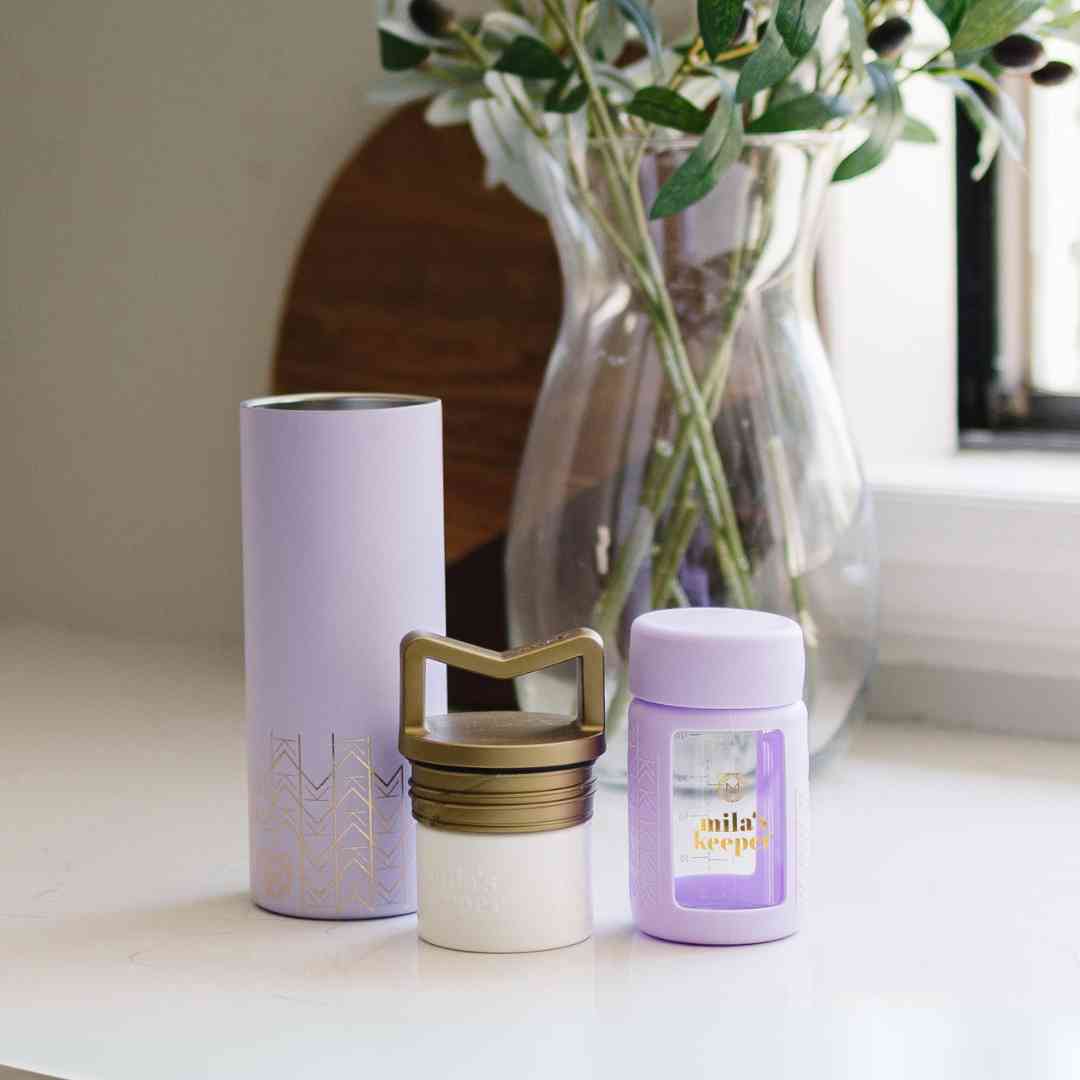
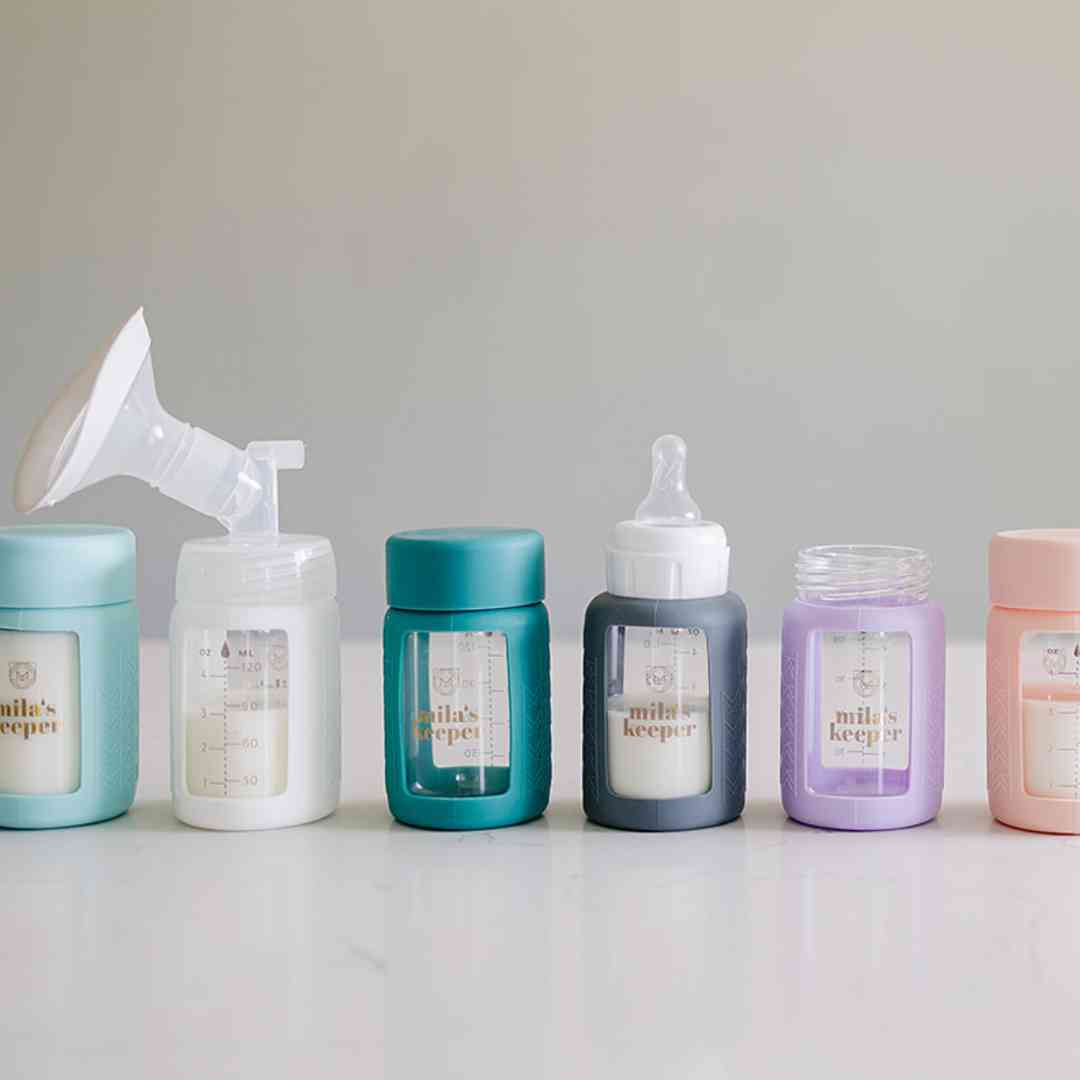
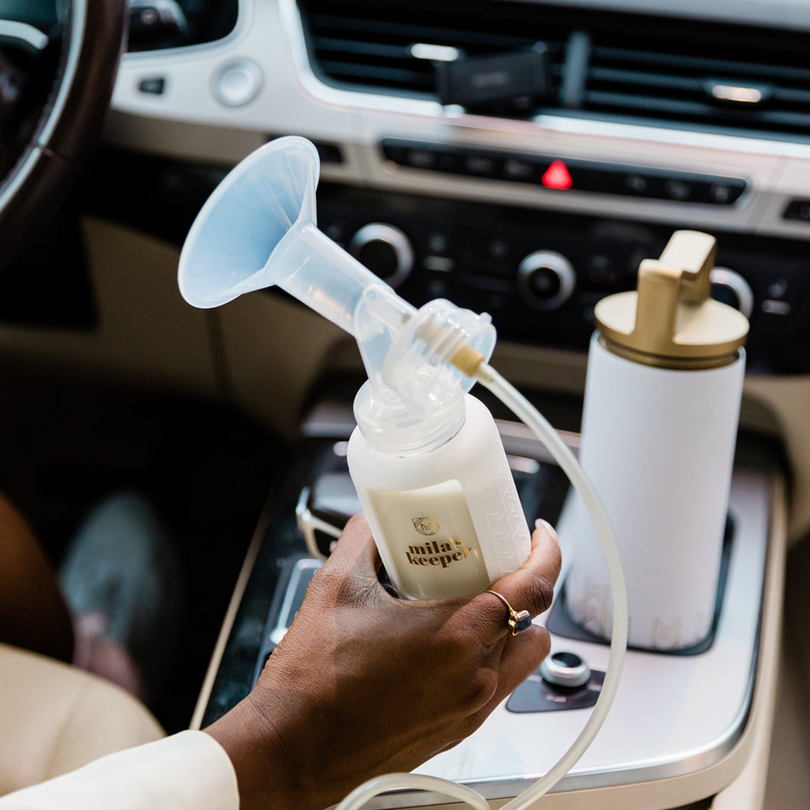
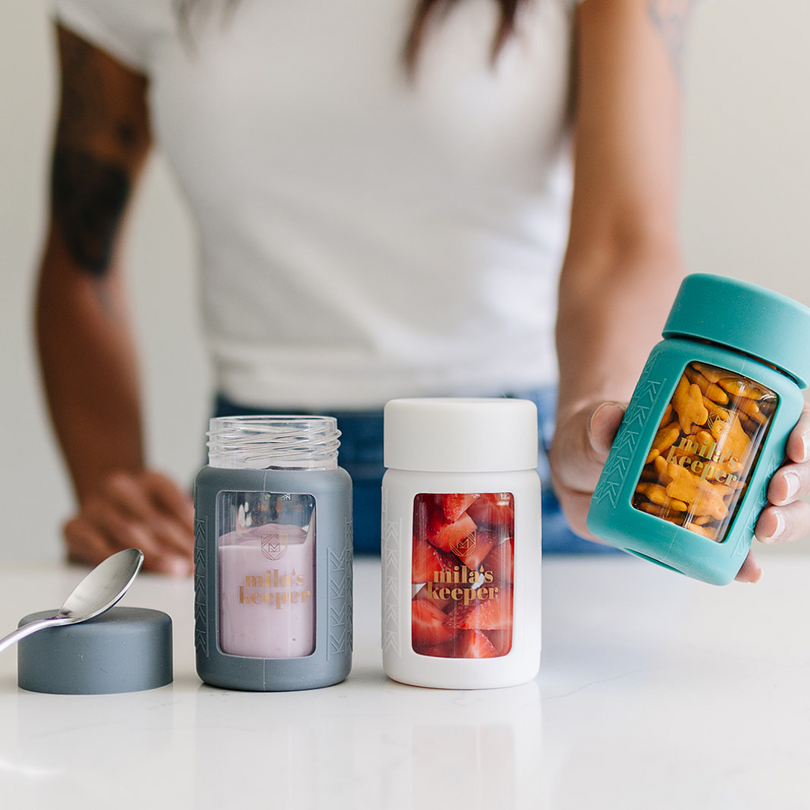
Our 3-in-1 Glass Breast Milk Storage Bottles are made from borosilicate glass — completely inert, meaning nothing leaches into your milk regardless of temperature. Their clear design also makes TSA screening faster and easier. Our LFGB-certified Silicone Breast Milk Bottles — made to Europe's strictest food-contact safety standard, which goes beyond US FDA requirements — are virtually unbreakable, making them ideal for travel.

How the MilKeeper® System Makes Travel Simpler
Here is what traveling with Mila's Keeper actually looks like.
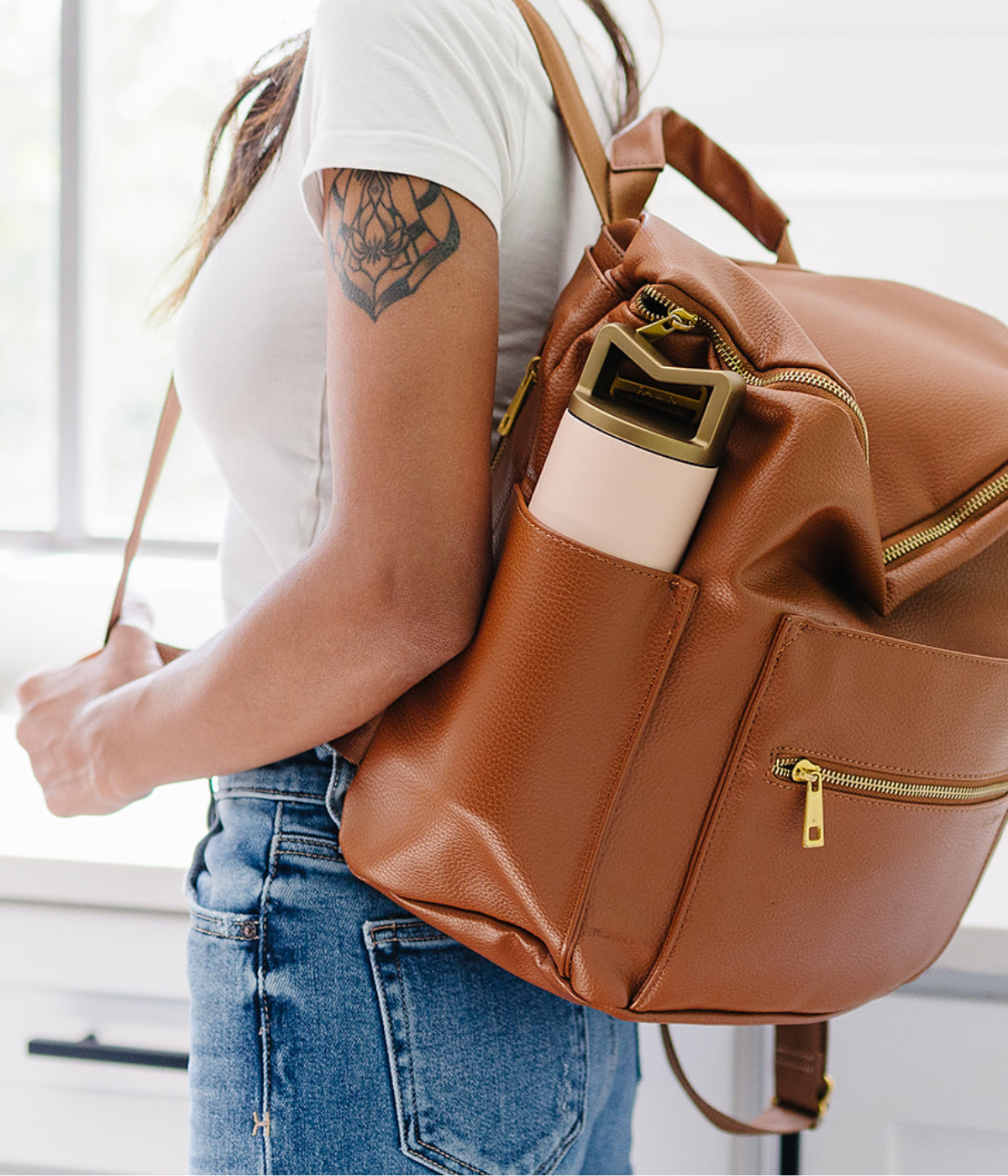
Our MilKeeper® cooler is a TSA approved breast milk cooler that keeps breast milk cold for up to 20 hours without ice. No bulky cooler, no ice pack juggling, no worrying about whether your gel pack will make it through security in the right state. It is a sleek, thermos-style cooler that fits in a cup holder and goes straight through TSA.
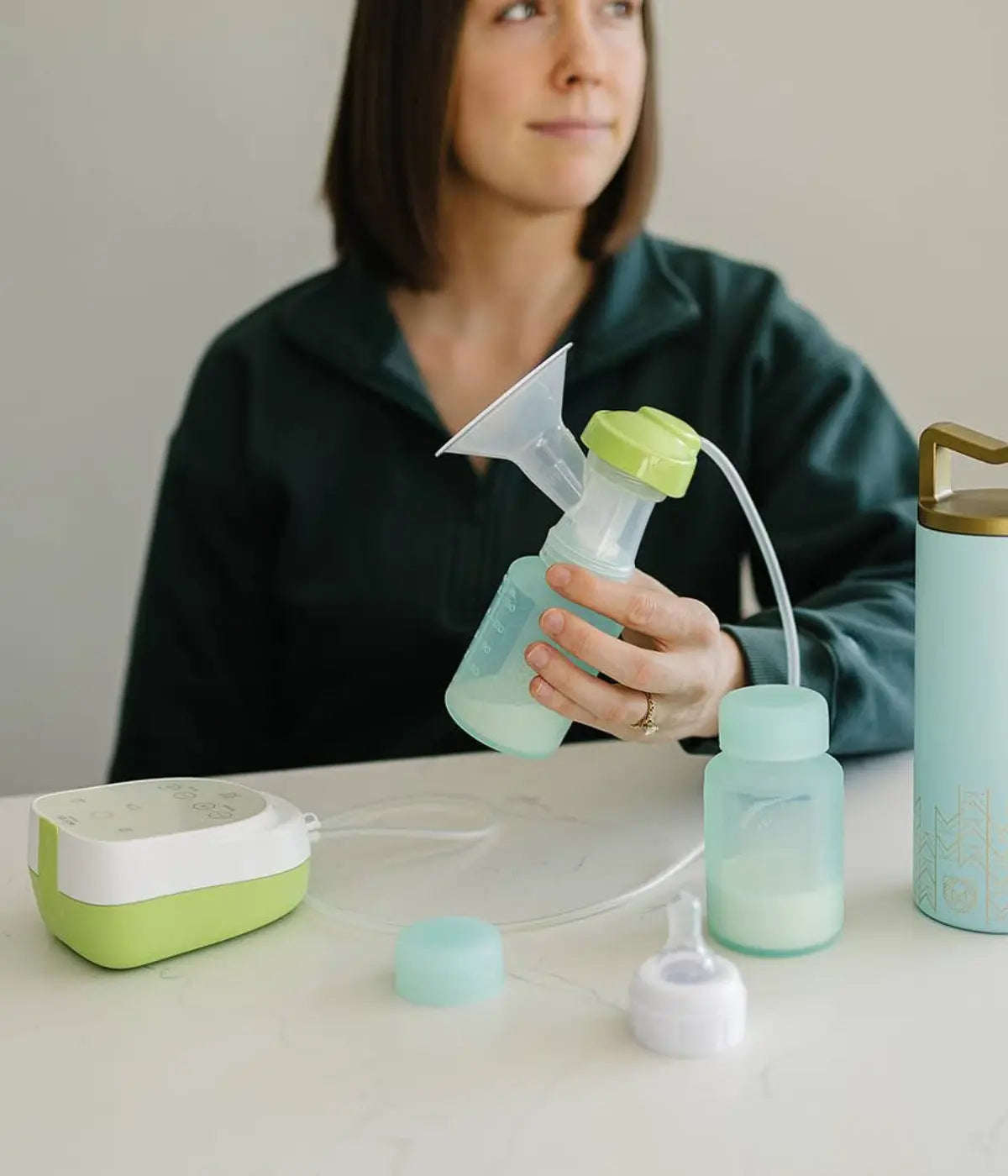
Our glass and silicone bottles are the only 3-in-1 breast milk bottles on the market. They attach directly to most major pumps, store your milk, and feed your baby — all in the same bottle. No transfers. No extra parts to wash. No plastic touching your milk at any point in the process.
For a pumping mom at an airport, that simplicity is everything.
The MilKeeper® system is TSA-friendly and HSA/FSA eligible. It was named a TIME Best Invention and Parents' Best Breastfeeding Accessory of 2026. But more than the accolades, what we hear most from moms is that it makes them feel less stressed and more in control — which is exactly what we set out to do.

Your Pre-Flight Checklist
The night before:
- ✅ Pre-freeze your MilKeeper® ice pack
- ✅ Charge your breast pump and pack a portable battery backup
- ✅ Look up lactation room locations at your departure and arrival airports
- ✅ Pull up TSA breast milk guidelines on your phone — save the link
What to pack:
- ✅ MilKeeper® — a TSA approved breast milk cooler — with ice pack and glass or silicone bottle inside
- ✅ Breast pump in its own accessible pouch
- ✅ Small hand pump as backup for delays or dead batteries
- ✅ Cleaning wipes for pumping on the go
- ✅ About 20% more milk than you think you'll need
At security:
- ✅ Pull your milk, cooler, and pump out separately — like a laptop
- ✅ Declare upfront: "I have medically necessary breast milk and cooling accessories"
- ✅ Request clean gloves if agents handle your items
- ✅ Ask for alternative screening if they move to open your containers
- ✅ Stay calm, stay factual, and ask for a supervisor if needed
You've Got This
Traveling as a pumping mom is one of those things that feels overwhelming before you do it and completely manageable once you have a system. The rules are on your side, the gear has gotten better, and you do not have to choose between your travels and your breastfeeding goals.
If you have questions about traveling with our products or want help figuring out which set is right for your trip, reach out anytime. We are a small, mission-driven team and we actually write back.
Safe travels, mama.
Lara Vu, MPH, CLES
Founder, Mila's Keeper
milaskeeper.com
Mila's Keeper is a Certified B Corp making plastic-free breast milk storage products. Our MilKeeper® TSA approved breast milk cooler, glass bottles, and silicone bottles are designed to make pumping simpler, safer, and more sustainable for every family.