



Supporting Latina Mothers at Work and Beyond
Research, workplace realities, and the support Latina mothers need to continue breastfeeding
"In my culture, we don't talk about the challenges (of breastfeeding). There's this unspoken pressure that a woman's body should be able to do everything. That only a good mother breastfeeds..." - Leslie Rangel, boy mom
Every August, Latina/x Breastfeeding Week, Semana de La Lactancia Latina, creates space to celebrate Latina families, honor the traditions that have supported generations of mothers, and bring greater visibility to the unique experiences Latina parents face while breastfeeding.
Breastfeeding is deeply personal, but it never happens in isolation. For many Latina mothers, returning to work is the moment when a breastfeeding goal collides with an inflexible schedule, an unpaid break, an unsuitable pumping space, or no safe way to store and transport milk.
Latina mothers are beginning breastfeeding at rates close to or in some datasets above the national average. The more urgent question is whether their workplaces make it possible to continue. This week is a reminder that when we celebrate Latina mothers, we must also strengthen the conditions surrounding them.

What the Research Shows About Latina Breastfeeding Rates
The national data tell an important and nuanced story. Latina mothers in the United States are not necessarily less likely to start breastfeeding than mothers overall. The greater challenge is often receiving enough support to breastfeed exclusively and continue for as long as they intended.
According to the latest data from the U.S. Centers for Disease Control and Prevention (CDC), among infants born in 2023:
85.6% of Hispanic infants were ever breastfed, compared with 86.1% of U.S. infants overall.
Across all U.S. infants, 62.8% were breastfed at six months, 40.8% at one year, and only 29.8% were exclusively breastfed through six months.

The picture changes depending on what we measure. Hispanic infants began breastfeeding at approximately the national rate, yet they were 2.4 percentage points below the national rate for exclusivity through three months and 1.3 points below at six months. Compared with non-Hispanic White infants, the gaps were larger: 6.5 points at three months and 3.5 points at six months.
There is also a substantial drop between the two exclusive-breastfeeding milestones: from 45.2% through three months to 26.6% through six months among Hispanic infants, a difference of 18.6 percentage points. But this is not uniquely a Latina decline. The national rate fell by 19.7 points across the same milestones, while the White and Black rates fell by 21.6 and 17.5 points, respectively.
That distinction matters. These data do not prove that returning to work caused the decline, and they do not track the same mothers immediately before and after a specific return-to-work date. They do show that the period between three and six months, when many mothers have already returned to employment, is a major point of lost exclusivity across the United States.
Another large CDC peer-reviewed study of nearly six million births in 2020 and 2021 found that 86.8% of Hispanic mothers initiated breastfeeding, compared with 84.0% of mothers overall. But the aggregated Hispanic figure concealed meaningful differences: initiation ranged from 82.2% among Puerto Rican mothers to 90.9% among Cuban mothers, with Mexican mothers at 86.9%. The study did not measure how long mothers breastfed or whether breastfeeding was exclusive, and it excluded California and Michigan because of data limitations. Even so, it is an important reminder that “Latina” represents many distinct communities, not a single, uniform experience.
Academic research helps explain why a strong start does not always translate into longer duration. A University of California, Berkeley study of Mexican-origin women in California’s Salinas Valley found that median exclusive-breastfeeding duration declined with increased time living in the United States: from two months among women who had lived in the country for five years or less to one month among those living here for six to ten years. Researchers have associated this pattern with acculturation and changes in social, workplace, and infant-feeding environments not with a lack of commitment by Latina mothers.
Research involving Los Angeles County WIC participants has likewise found that hospital practices and an early return to work are associated with breastfeeding duration. And a meta-analysis led by researchers at the University of North Carolina at Chapel Hill, published in Pediatrics, found that culturally targeted clinical interventions increased both any and exclusive breastfeeding among Latinas. The most promising approaches combined prenatal and postpartum contact and included support from lactation professionals or trained peer providers, sometimes through home visits.
Together, these findings shift the question from “Why don’t more Latina mothers breastfeed?” to a more useful one: What support helps Latina mothers continue?
Where Are the Largest Latina Mother and Baby Communities?
Nationally, 26.3% of U.S. births during 2022–2024 were to Hispanic mothers, according to March of Dimes PeriStats using National Center for Health Statistics natality data. But those births are not distributed evenly across the country. Looking at both the number of births and the share of births that are Hispanic helps identify where culturally and linguistically responsive breastfeeding support could reach the most families.

The scale figures are directional estimates calculated by applying the 2022–2024 average Hispanic share to 2024 total births; they are not official single-year counts.
Sources: March of Dimes PeriStats state profiles based on National Center for Health Statistics data: California, Texas, Florida, New York, Arizona, Illinois, and New Jersey.
California and Texas stand out for sheer scale: together, they account for an estimated nearly 390,000 Hispanic births annually. Florida and New York form a second large tier. Arizona, Illinois, and New Jersey also represent substantial communities.
Another group of states matters because Latina mothers make up an especially large proportion of the birthing community. Hispanic mothers accounted for 59.0% of births in New Mexico, 49.5% in Texas, 48.7% in California, 45.1% in Arizona, and 39.9% in Nevada. In these states, support designed with Latina families is not a niche program; it is central to maternal and infant health.
These statewide figures are only a starting point. Within each state, families are concentrated in particular counties and metro areas, and their experiences differ by national origin, language, income, occupation, immigration history, and access to healthcare. For outreach, the most promising next layer would be county-level analysis around communities such as Los Angeles and the Inland Empire; Houston, Dallas–Fort Worth, San Antonio, and the Rio Grande Valley; Miami and Central Florida; New York City and northern New Jersey; Phoenix; Las Vegas; Chicago; and Albuquerque.

The Most Important Disparities May Be Within the Latina Community
Compared with broad racial groups in the CDC’s 2020–2021 birth-certificate study, Hispanic mothers had a higher breastfeeding-initiation rate than mothers overall (86.8% versus 84.0%) and a rate close to White mothers (85.9%). Initiation was highest among Asian mothers (90.1%) and substantially lower among Black mothers (74.5%) and American Indian or Alaska Native mothers (77.7%).
But broad comparisons can hide the disparities that Latina/x Breastfeeding Week is meant to illuminate. Within the Hispanic population, initiation rates were:

The 8.7-percentage-point difference between Cuban and Puerto Rican mothers narrowed but did not disappear after researchers adjusted for age, education, nativity, marital status, WIC participation, delivery method, and other characteristics. That suggests it would be a mistake to design one generic “Latina breastfeeding” intervention for every community.
There is also a major data limitation: the best recent disaggregated national study measures only whether breastfeeding began during the birth hospitalization. It does not tell us which Latina communities are most likely to encounter a drop after returning to work, or how state-level rates compare for exclusive breastfeeding and continuation at six or twelve months. California, the state with the largest number of Hispanic births, was also excluded from that study because its breastfeeding data were not reported to the national birth-certificate system.
That missing information is itself revealing. To understand where support is most urgently needed, public agencies and researchers should report breastfeeding duration and exclusivity by geography, Hispanic origin, language, income, and occupation, not ethnicity alone.

For Many Latina Mothers, the Workplace Is the Breaking Point
Returning to work can disrupt breastfeeding for any mother, but not every worker returns to the same conditions. A salaried employee with a private office, control over her calendar, paid leave, and access to a refrigerator faces a very different reality from a mother working an hourly shift in a restaurant, hotel, warehouse, agricultural setting, healthcare facility, retail store, or factory.
These differences matter for Latina workers. In the U.S. Bureau of Labor Statistics’ 2017–2018 job-flexibility data, 50% of Hispanic or Latino wage and salary workers had access to a flexible schedule, compared with 58% of non-Hispanic workers. A separate BLS analysis found that Hispanic workers were six percentage points less likely than non-Hispanic White workers to have access to any paid family or medical leave, even after accounting for several worker and job characteristics.
These are not breastfeeding statistics, but they describe the working conditions that determine whether pumping is realistically possible. A mother may technically be allowed to pump but still face barriers such as:
- A shift that is too busy or understaffed for predictable pumping breaks.
- Lost wages when breaks are unpaid.
- Pressure from a supervisor or coworkers to finish quickly or skip a session.
- A pumping space that is distant, shared, exposed, or unavailable when needed.
- No refrigerator, or discomfort storing breast milk in a communal refrigerator.
- A long commute without a dependable way to keep milk safely cooled.
- Limited information about workplace rights, especially in her preferred language.
- Fear that requesting accommodations could affect her hours, job security, or standing at work.
Federal protections have expanded under the PUMP for Nursing Mothers Act, which generally requires employers covered by the law to provide reasonable break time and a private space other than a bathroom for expressing milk for up to one year after birth. But a legal right only becomes meaningful when a worker knows about it and can use it without retaliation, lost opportunity, embarrassment, or fear.
Research supports the importance of these protections. A 2025 consensus report from the National Academies of Sciences, Engineering, and Medicine noted that workplace-accommodation requirements have been associated with greater likelihood of exclusive breastfeeding at six months, yet one study found that only 40% of mothers reported access to both the necessary time and space. A systematic review of workplace breastfeeding programs also found that lactation spaces, pumping breaks, and supportive organizational policies can increase breastfeeding duration and help prevent the early introduction of breast-milk substitutes.
The timing evidence makes the three-month milestone especially important. In one national study, more than half of mothers returned to paid employment within three months of giving birth, including 13.7% who returned before six weeks. Mothers who returned to full-time work before three months were less likely to meet their own intention to breastfeed for at least three months; returning part-time was not associated with the same outcome. Another national study, summarized by the University of Minnesota School of Public Health, found that mothers with access to both adequate break time and a private pumping space were 2.3 times as likely to breastfeed exclusively for six months as mothers without both accommodations.
For Latina workers, the concern is compounded by lower access to paid leave and schedule flexibility. The CDC rates alone cannot isolate the effect of employment by ethnicity, but the combined evidence identifies a plausible pressure point: many mothers return during or before the period when exclusive breastfeeding falls sharply, and Latina workers are less likely than their White non-Hispanic peers to have some of the workplace conditions that make continued milk expression possible.
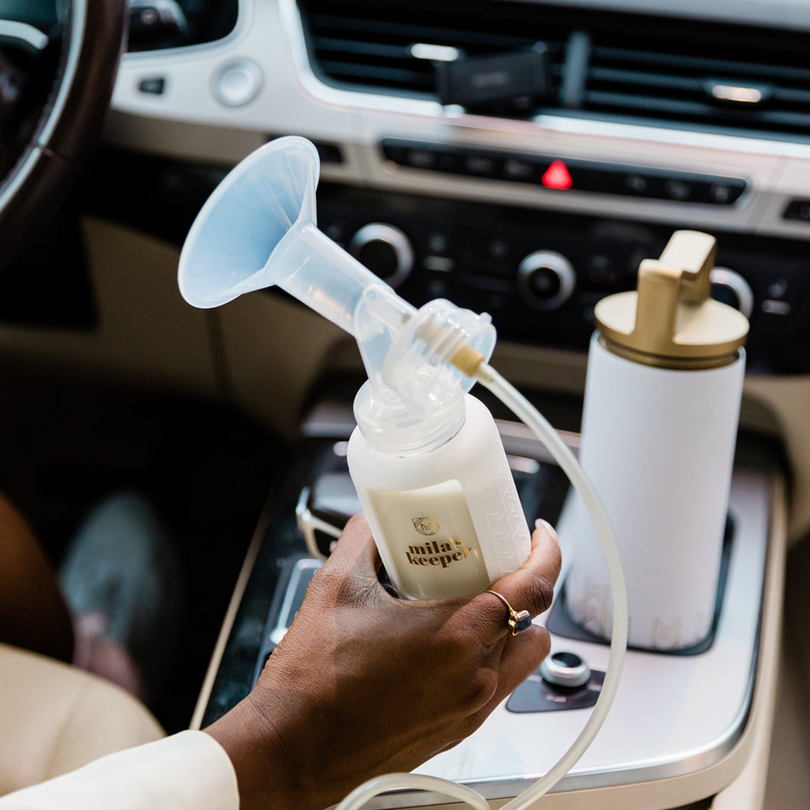
The lesson is simple: a pumping room alone is not enough. Mothers also need the time to use it, a workplace culture that protects that time, and a reliable way to store and transport their milk.
Culture Can Be a Powerful Source of Support
Across the many cultures and countries represented within the Latina/x community, family and community often play a central role during pregnancy, birth, and the postpartum period. Mothers, abuelas, tías, sisters, partners, and friends may all contribute knowledge, encouragement, food, childcare, and hands-on help.
That intergenerational care can be a remarkable source of strength. A familiar meal, a reassuring story from an abuela, or the presence of someone who understands a mother’s language and traditions can help her feel less alone during an enormous life transition.
At the same time, every family carries different beliefs and experiences. Some relatives may strongly encourage breastfeeding, while others may recommend formula, early supplementation, or feeding practices based on the guidance they received years ago. Supporting a new mother does not mean dismissing family wisdom. It means listening with respect, sharing current information without judgment, and centering the mother’s own goals.
Representation and Language Matter
Breastfeeding guidance is most useful when a mother can fully understand it, ask questions comfortably, and feel that her concerns are taken seriously.
For Spanish-speaking families, access to bilingual and bicultural lactation support can make a meaningful difference. It is not enough to hand someone translated instructions. Good care requires conversation, trust, and an understanding of the family and cultural context in which feeding decisions are being made.
Representation matters, too. When Latina mothers see lactation consultants, peer counselors, doulas, nurses, physicians, educators, and community leaders who look like them or understand their lived experiences, breastfeeding support can feel more relevant, welcoming, and possible.
Latina families are not a monolith. They represent many races, nationalities, languages, immigration stories, family structures, and economic circumstances. Truly inclusive care makes room for those differences instead of treating one experience as universal.
The Barriers Are Bigger Than Motivation
Conversations about breastfeeding can place too much responsibility on the mother: Does she want it enough? Did she try hard enough? Did she ask for help?
But motivation cannot create paid leave. It cannot make a lactation consultant affordable, add a pumping break to an inflexible shift, or provide a safe place to store milk.
Many Latina mothers work in jobs that make continued breastfeeding especially difficult jobs with rigid schedules, limited privacy, unpredictable breaks, or inadequate refrigeration. Some return to work very soon after giving birth. Others may hesitate to request accommodations because they do not know their rights, fear losing income, or worry about how an employer will respond.
A mother can receive excellent support in the hospital and still encounter an entirely different reality when she goes home or returns to work. That is why breastfeeding support must extend beyond encouraging mothers to begin. It must help them continue for as long as they choose.
What Meaningful Support Looks Like

Real support is practical, culturally responsive, and free from judgment. It can look like:
- Offering prenatal and postpartum breastfeeding education in a family’s preferred language.
- Expanding access to bilingual, bicultural lactation professionals and peer counselors.
- Inviting partners and family members into breastfeeding education when the mother wants them included.
- Ensuring workers have adequate break time, a private pumping space, and a reliable way to cool and transport their milk.
- Training managers in lactation accommodations and making workplace policies available in Spanish and other languages employees use.
- Designing support for hourly, mobile, agricultural, hospitality, retail, healthcare, warehouse, and other workers who cannot simply close an office door or rearrange a meeting.
- Making pumps, milk-storage supplies, and skilled lactation care affordable and accessible.
- Asking a mother what she hopes for instead of making assumptions about her feeding choices.
- Supporting combination feeding, exclusive pumping, donor milk, formula feeding, or weaning without shame when those are part of a family’s journey.
- Listening to Latina mothers and investing in community-led programs designed around their actual needs.
Supporting breastfeeding should never mean measuring a mother’s love by the number of ounces she produces or the length of time she nurses. The goal is not perfection. The goal is for every mother to receive accurate information, compassionate care, and the freedom to make informed decisions for herself and her baby.
Celebrating Strength and Building Something Better
During Latina/x Breastfeeding Week, we celebrate the mothers who nurse before an early shift, pump during a busy workday, seek answers in a healthcare system that may not speak their language, and rely on family and community to keep going.
We also celebrate the abuelas, partners, friends, peer counselors, lactation professionals, healthcare workers, employers, and advocates who help make breastfeeding possible.
But celebration should lead to action. We can honor Latina mothers by amplifying their voices, improving access to culturally responsive care, protecting their rights at work, and removing the practical barriers that too often cut a breastfeeding journey short.
At Mila’s Keeper, we believe every mother deserves the support to feed her baby and continue being the person she is at home, at work, and everywhere life takes her. This week, and every week, let’s listen to Latina mothers, learn from their experiences, and help build the village they deserve.
Feliz Semana de La Lactancia Latina.
How has your culture or community supported your breastfeeding journey? We invite you to share your story and help another mother feel seen.
Hear Leslie Rangel's beautiful story in her words on Instagram.
Sources and Further Reading
Centers for Disease Control and Prevention. About Breastfeeding Data: Key Indicators and Current Rates. Data for infants born in 2023, National Immunization Survey–Child 2024–2025.
Marks KJ, Nakayama JY, Chiang KV, et al. Disaggregation of Breastfeeding Initiation Rates by Race and Ethnicity—United States, 2020–2021. Preventing Chronic Disease. 2023;20:230199. doi:10.5888/pcd20.230199.
Harley K, Stamm NL, Eskenazi B. The Effect of Time in the U.S. on the Duration of Breastfeeding in Women of Mexican Descent. Maternal and Child Health Journal. 2007;11(2):119–125. doi:10.1007/s10995-006-0152-5. Research from the University of California, Berkeley CHAMACOS cohort.
Langellier BA, Chaparro MP, Whaley SE. Social and Institutional Factors That Affect Breastfeeding Duration Among WIC Participants in Los Angeles County, California. Maternal and Child Health Journal. 2012;16(9):1887–1895.
Wouk K, Lara-Cinisomo S, Stuebe AM, Poole C, Petrick JL, McKenney KM. Clinical Interventions to Promote Breastfeeding by Latinas: A Meta-analysis. Pediatrics. 2016;137(1):e20152423. doi:10.1542/peds.2015-2423.
U.S. Bureau of Labor Statistics. Job Flexibilities and Work Schedules—2017–2018 Data. Hispanic or Latino wage and salary workers were less likely to report a flexible schedule than non-Hispanic workers.
Bartel AP, Kim S, Nam J, Rossin-Slater M, Ruhm CJ, Waldfogel J. Racial and Ethnic Disparities in Access to and Use of Paid Family and Medical Leave. Monthly Labor Review. U.S. Bureau of Labor Statistics; 2019.
National Academies of Sciences, Engineering, and Medicine. Return to Work and School, in Breastfeeding in the United States: Strategies to Support Families and Achieve National Goals. Washington, DC: The National Academies Press; 2025.
Vilar-Compte M, Hernández-Cordero S, Ancira-Moreno M, et al. Breastfeeding at the Workplace: A Systematic Review of Interventions to Improve Workplace Environments to Facilitate Breastfeeding Among Working Women. International Journal for Equity in Health. 2021;20:110.
U.S. Department of Labor. PUMP at Work: Protections for Nursing Employees. Accessed August 2026.
March of Dimes PeriStats. Percentage of U.S. Births by Race and Ethnicity. Based on National Center for Health Statistics final natality data, 2022–2024 average.
March of Dimes PeriStats state birth profiles for California, Texas, Florida, New York, Arizona, Illinois, New Jersey, New Mexico, and Nevada. Based on National Center for Health Statistics final natality data.
Centers for Disease Control and Prevention. Rates of Any and Exclusive Breastfeeding by Sociodemographic Characteristics Among Children Born in 2022. National Immunization Survey–Child.
Mirkovic KR, Perrine CG, Scanlon KS. Paid Maternity Leave and Breastfeeding Outcomes. Journal of Human Lactation. 2014;30(4):416–419. The study examined return-to-work timing, work intensity, and whether mothers met their breastfeeding intentions.
Kozhimannil KB, Jou J, Gjerdingen DK, McGovern PM. Access to Workplace Accommodations to Support Breastfeeding After Passage of the Affordable Care Act. Women’s Health Issues. 2016;26(1):6–13. See the University of Minnesota School of Public Health summary.
Mila’s Keeper • Celebrating Latina/x Breastfeeding Week •
Keep Reading: August Is National Breastfeeding Awareness Month!
--
A female-designed and female-run company, Mila's Keeper is on a mission to empower women to thrive during their breastfeeding journey by offering reusable, eco-friendly breast milk storage solutions for their day-to-day needs. Get the latest tips and info on Mila's Keeper products by following us on Facebook, Twitter, Instagram, Pinterest, and LinkedIn.