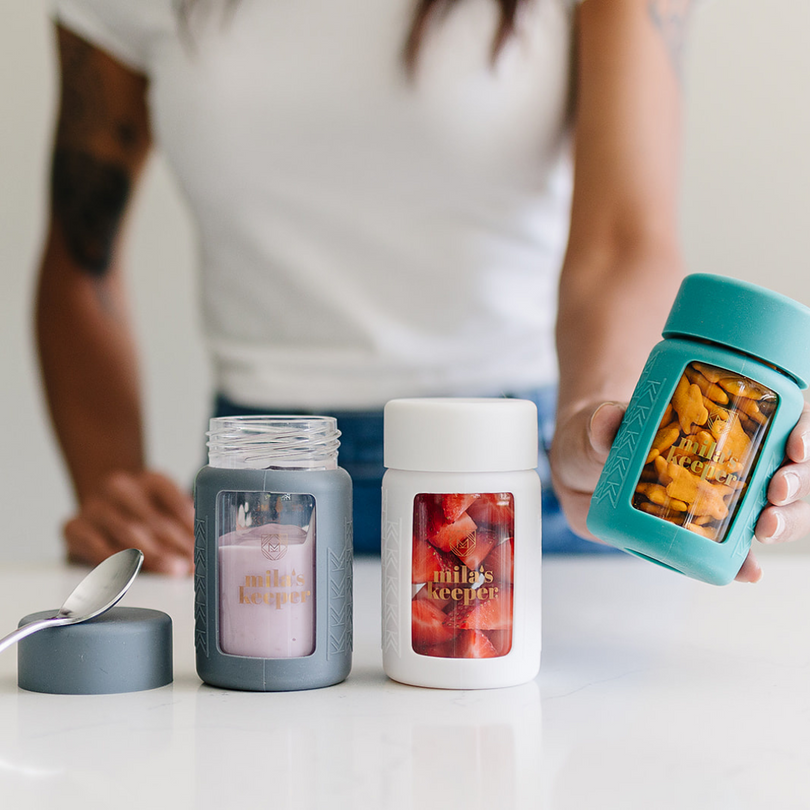




Glass is one of the best materials you can feed your baby from. It's nonporous, so it won't hold onto odors or residue. It's transparent, so you can see exactly what's inside. And it doesn't shed microplastics into breast milk or formula.
But glass has one property no design can remove: it can break.
That's the appeal of silicone-coated glass baby bottles, also sold as glass wrapped in silicone or wrapped glass bottles. Food-grade silicone is molded directly onto the glass, and the bottle is often marketed as "break-proof," "shatterproof" or "shatter-safe." It's a compelling promise: the purity of glass without the risk. So it's worth asking a precise question. Has the glass changed, or just the label?

The short answer
No. A silicone-coated glass baby bottle is not truly break-proof and we would argue less safe The coating can absorb impact, improve grip and help hold pieces together if the glass fails. It cannot change what glass is. Under enough force, the glass underneath can still crack or shatter.
That doesn't make silicone-coated glass a bad product. It means two very different claims are often blurred together:
- "Designed to help protect glass from breaking" describes something silicone genuinely does.
- "Break-proof" implies the risk has been eliminated. It hasn't.
- "Safer"implies that it will protect your baby from harm, when in reality, we would argue it makes it less safe because you cannot inspect it for shards and imperfections.
When you shop, be wary of claims in terms of what they imply and what they actually could mean.
Silicone-wrapped glass isn't new
Permanently coating glass in silicone can look like a recent breakthrough. It isn't. U.S. Patent Application Publication No. US 2011/0006028 A1, which claims priority to a provisional application filed July 10, 2009, describes glass baby bottles coated in silicone by dipping or by injection overmolding. Its stated goals: shock resistance to prevent breakage in many typical drops, and total glass containment if the bottle does break.
That last phrase is telling. The application calls its coating a "shatterproof" silicone sleeve, yet it still plans for the bottle breaking. The silicone was there to reduce breakage and manage the outcome, not to make glass unbreakable.
So the real question isn't whether to protect glass with silicone. It's how.
Silicone molded on vs. a removable silicone sleeve
There are two ways to put silicone around a glass bottle. You can mold it on permanently (a coating, silicone wrap or overmold), or you can fit a removable silicone sleeve. Both cushion the glass. They differ in almost everything else.
|
|
Permanently bonded silicone |
Removable silicone sleeve |
|---|---|---|
|
Cushions impact |
Yes |
Yes |
|
Can you inspect all of the glass? |
No |
Yes |
|
Clean and dry parts separately |
No |
Yes |
|
If one material is damaged |
Often the whole bottle goes |
Replace only that part |
|
End of life |
Two materials fused together, not recyclable |
Already separated and recyclable |
To be clear: properly engineered, food-grade silicone bonded to glass is not inherently unsafe. The differences are design tradeoffs, not safety verdicts. Here's why we landed on the sleeve.
1. You should be able to see the glass
Transparency is one of glass's greatest strengths. A permanent coating hides part of it. With a removable sleeve, you can slip it off and check for chips, hairline cracks, scratches or impact damage. For a bottle that may hold breast milk hundreds of times, that visibility matters. Take the sleeve off. Look. Put it back on.
2. Cleaning is simpler when parts come apart
The CDC recommends separating infant feeding items into their individual parts for cleaning and letting every part air-dry completely before reassembly. A removable sleeve follows that guidance naturally. Glass and silicone can each be washed, dried and inspected on their own.
3. No bond means no bond to fail
Bonding silicone to glass is its own manufacturing process. The 2009 patent application, for example, describes dipping glass into a solvent dispersion of uncured silicone rubber, or holding the glass in a mold while liquid silicone is injected around it and cured. Once bonded, that layer has to keep performing through refrigeration, freezing, warming, boiling, sterilizing, dishwashing and the occasional drop. Hundreds of times over. A sleeve sidesteps the question entirely. The protection works without the two materials ever being fused.
4. Separable materials are better for Mama Earth
Fused materials are hard to pull apart at end of life. And silicone recycling is still in its early days. A 2024 peer-reviewed review estimated that 35,000 to 45,000 metric tons of silicone waste would be chemically recycled worldwide that year, against roughly 3 million metric tons of silicone produced. Keeping glass and silicone separate follows a principle called design for disassembly. A torn sleeve doesn't send good glass to the landfill. A chipped bottle doesn't take a good sleeve with it.
As a Certified B Corporation, this is how we think about every product we make. Build something worth reusing. Design it to stay useful as long as possible.
"Plastic-free" is only half the question
Most parents start with a material question: What touches my baby's milk? That matters. But there's a second question that often gets skipped: How is the whole product designed to last?
A bottle can be completely plastic-free and still fuse two materials together permanently. When comparing plastic-free baby bottles, ask:
- Can I inspect every part?
- Can I take it apart to clean it?
- Can I replace one component without replacing the whole bottle?
- Are different materials permanently fused?
The answers tell you how long a bottle will actually stay in your rotation.
When glass isn't the right material at all
Sometimes the concern isn't how well the glass is protected. It's the glass itself.
Daycare is the clearest example. Many childcare centers don't allow glass bottles, and rules vary by state. Massachusetts' best practices for early education and care settings allow BPA-free plastic or glass. An Alabama Department of Public Health training module for child care providers tells them to use plastic bottles. If your provider doesn't accept glass, a silicone exterior may not change that, because underneath, it's still glass. Always check with your provider.
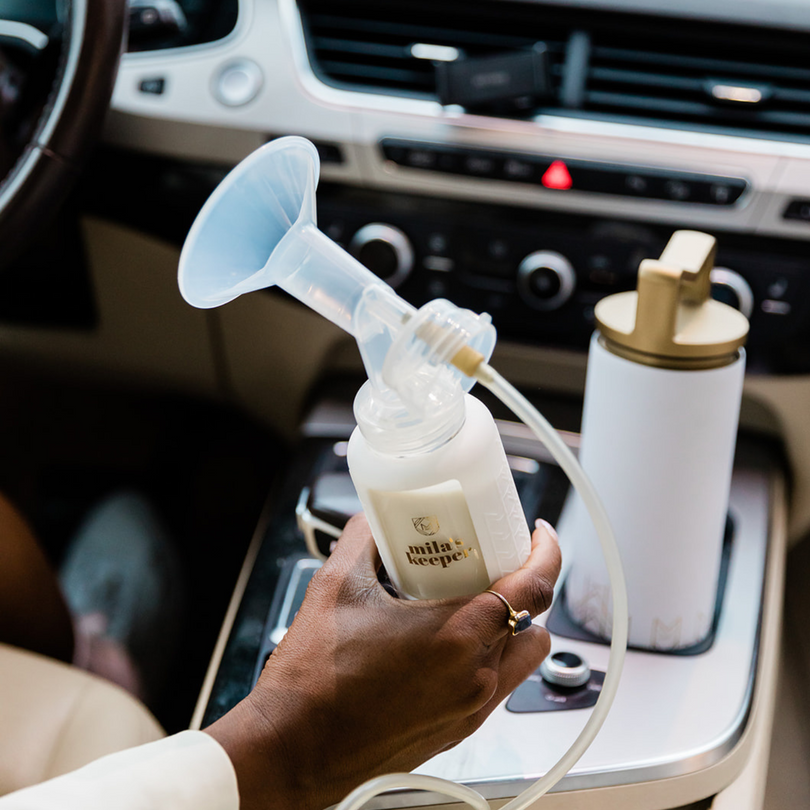
The same logic applies whenever breakage is simply not an option: travel, pumping at work, a packed diaper bag, or a baby who has discovered that bottles make excellent projectiles.
In those moments, the smartest move isn't to make glass act like something else. It's to choose a different material.
Glass or silicone: which is better for baby bottles?
Neither is better for every family. They solve different problems.
- Glass is transparent, nonporous and rigid. It's ideal at home. It can break.
- Silicone is soft, flexible and lightweight. It won't shatter. It's ideal on the go.
That's why Mila's Keeper makes both, and doesn't ask either one to pretend to be the other.
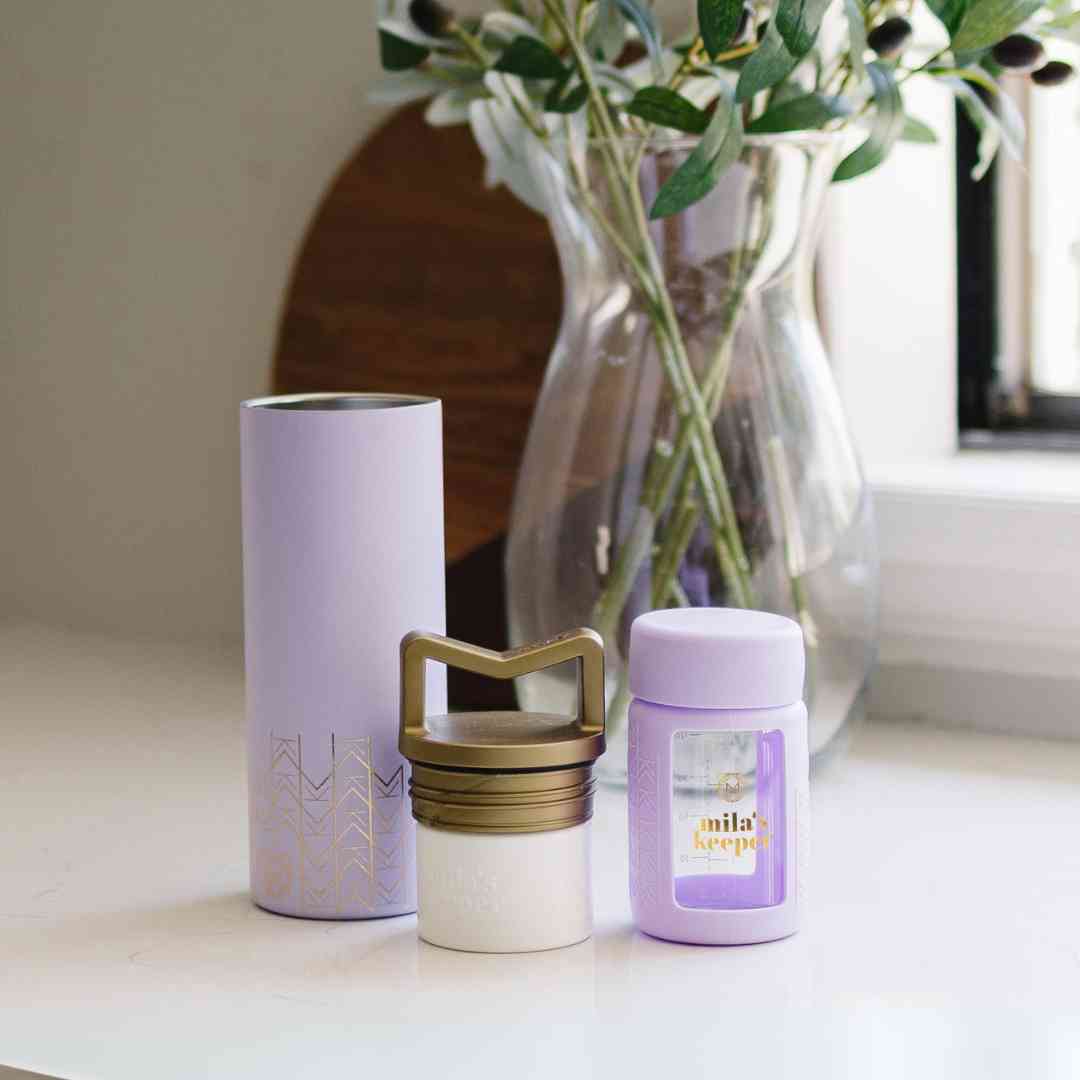
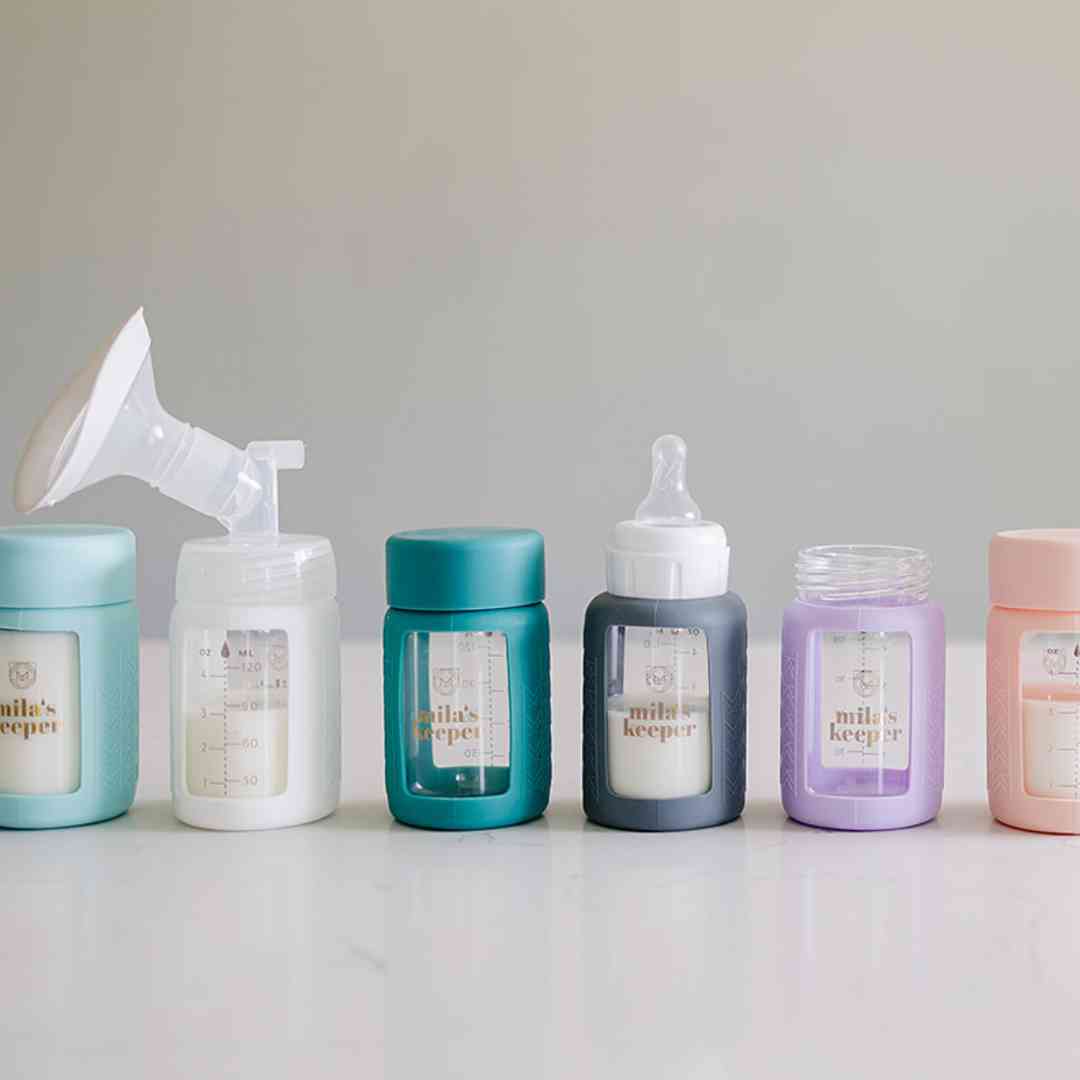
Borosilicate glass breast milk bottles with a removable silicone sleeve. For parents who want glass. You get the grip and cushioning of silicone, plus the freedom to remove it, inspect the glass and keep the two materials separate.
100% LFGB-certified silicone breast milk storage bottles. For parents who want to avoid plastic and don't want to worry about breakage. There's no glass hidden underneath. Made with platinum-grade silicone and independently tested for added transparency.

Frequently asked questions
Are silicone-coated glass baby bottles break-proof?
No. The coating adds real protection, but the bottle underneath is still glass and can break under enough force. "Break-proof" usually means "more resistant to breakage," not "unbreakable."
Does a silicone coating make glass shatterproof?
Not entirely. A coating can help reduce breakage from everyday drops and help contain pieces if the glass breaks. Borosilicate glass is also durable and handles temperature changes well. But no glass, coated or not, is unbreakable.
Is silicone-coated glass unsafe?
Not inherently. Properly engineered, food-grade silicone can be safely bonded to glass. The tradeoff is that you can't remove the coating to inspect the glass underneath, clean the parts separately or replace one material without the other.
What's the difference between a wrapped glass bottle and a glass bottle with a silicone sleeve?
On a wrapped glass bottle, the silicone is molded onto the glass and stays on for the life of the bottle. A silicone sleeve slides off, so you can inspect the glass, wash and dry each part separately, and replace one part without replacing the other.
Can I use a silicone-covered glass bottle at daycare?
It depends on your provider. Many daycares prohibit glass, and a silicone covering may not change that, since the bottle is still glass. A 100% silicone bottle avoids the question. Always check your center's policy.

What's the best plastic-free bottle if I'm worried about breakage?
A 100% silicone bottle. It avoids plastic entirely and won't shatter when dropped.
What does LFGB-certified silicone mean?
LFGB is the German Food and Feed Code, the German law that regulates materials intended to come into contact with food. It's widely regarded as one of the strictest food-contact standards in the world. LFGB-certified silicone has been tested against those requirements.
The bottom line
Parents don't need another "break-proof" claim. They need clear information about what a product can do, and what it can't.
Glass gets to be glass. Silicone gets to be silicone. And you get to choose what fits your life.
References
- Centers for Disease Control and Prevention. How to Clean, Sanitize, and Store Infant Feeding Items.
- Caldwell, G. Coated Glass Bottles and Articles and Methods of Manufacture. U.S. Patent Application Pub. No. US 2011/0006028 A1, published Jan. 13, 2011; claims priority to U.S. Provisional Application No. 61/224,516, filed July 10, 2009.
- Wolf, A. T., & Stammer, A. (2024). Chemical Recycling of Silicones: Current State of Play (Building and Construction Focus). Polymers, 16(15), 2220. doi:10.3390/polym16152220
- Massachusetts Department of Early Education and Care. Best Practices for Bottle Feeding in an Early Education and Care Setting.
- Alabama Department of Public Health. Module One: Feeding Infants and Toddlers in Early Childhood Settings.
- TÜV Rheinland. Food Contact Material Testing (overview of German LFGB requirements).
- B Lab. Mila's Keeper Certified B Corporation profile.
- Mila's Keeper. Product material and third-party testing information. [Add link to your testing page.]
Keep Reading: Glass vs. Plastic Baby Bottles: The Debate
--
A female-designed and female-run company, Mila's Keeper is on a mission to empower women to thrive during their breastfeeding journey by offering reusable, eco-friendly breast milk storage solutions for their day-to-day needs. Get the latest tips and info on Mila's Keeper products by following us on Facebook, Twitter, Instagram, Pinterest, and LinkedIn.